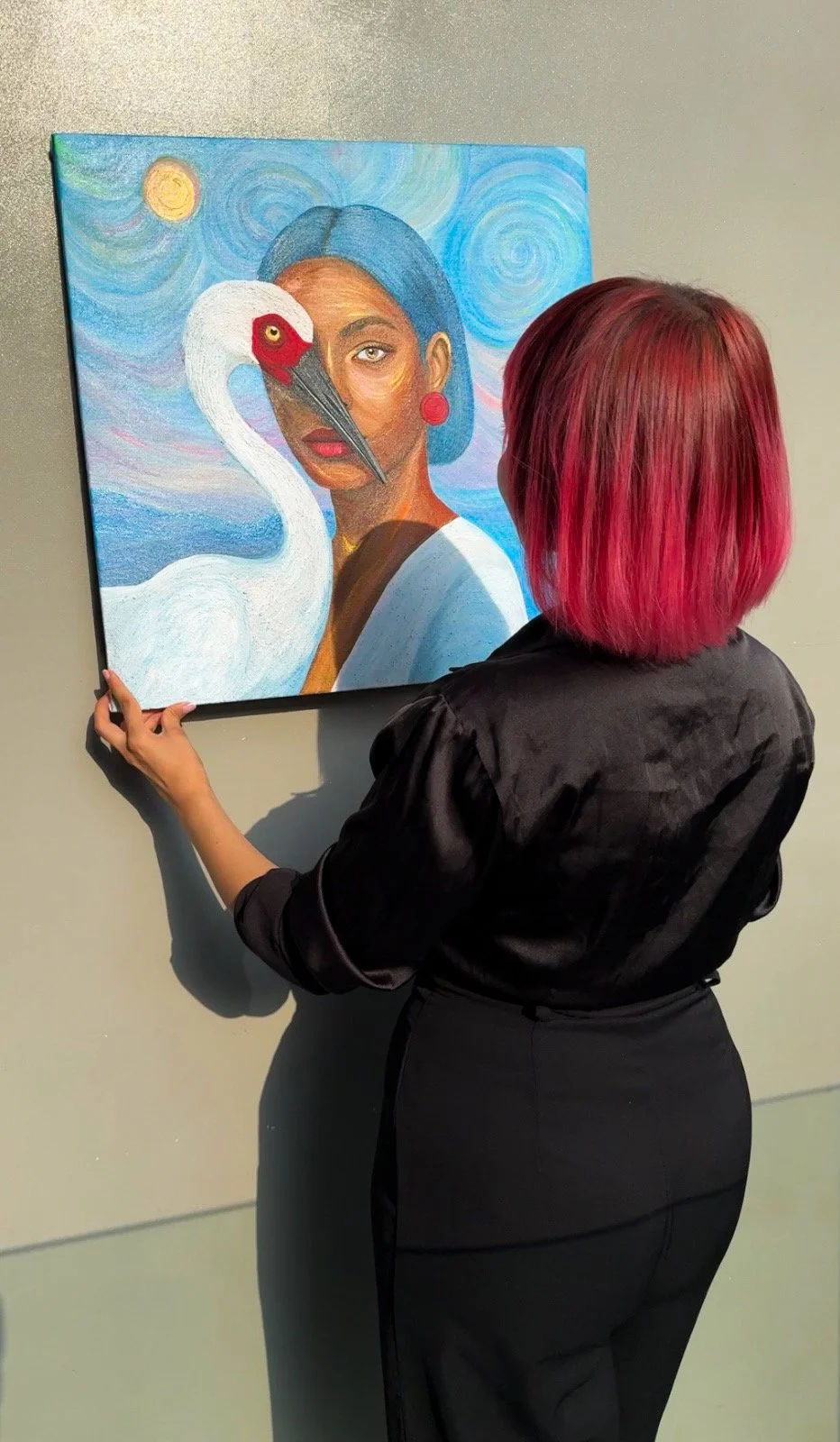
Shay Mess: Painting the Space Between Beauty and Becoming
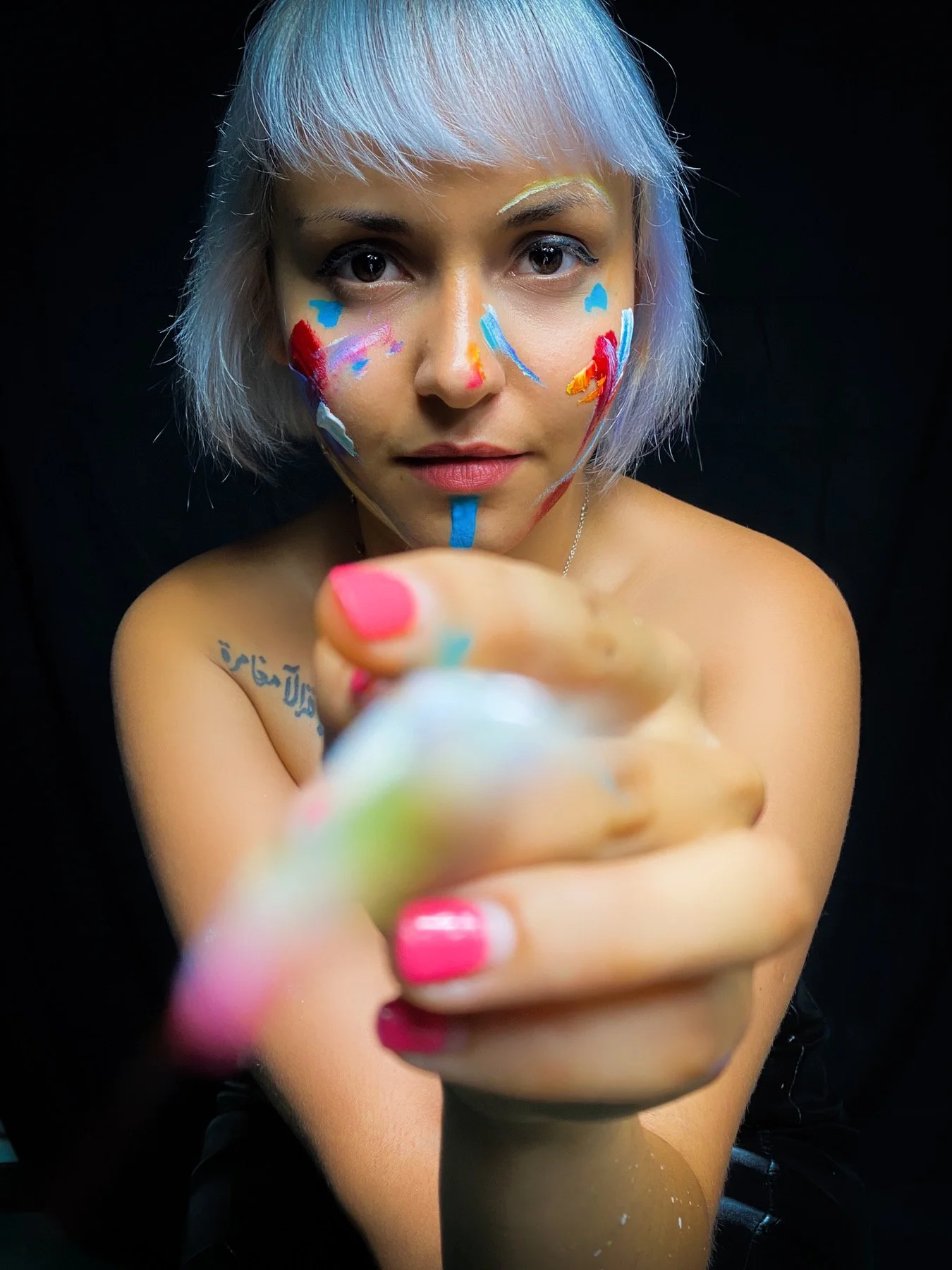
In an era where so much of contemporary art is driven by trends and spectacle, French artist Shay Mess has quietly built a body of work rooted in something far more enduring: emotion. Her paintings don't simply depict faces, they reveal inner landscapes, inviting viewers into moments of vulnerability, resilience, and transformation.
Entirely self-taught, Mess has forged her own artistic language through curiosity rather than convention. Without the structure of a formal art education, she developed her practice through observation, experimentation, and an unwavering commitment to intuition.
"I did not begin with academic rules or a fixed idea of what painting should be," she explains. "I had to build my own visual language through experimentation, observation, and repetition."
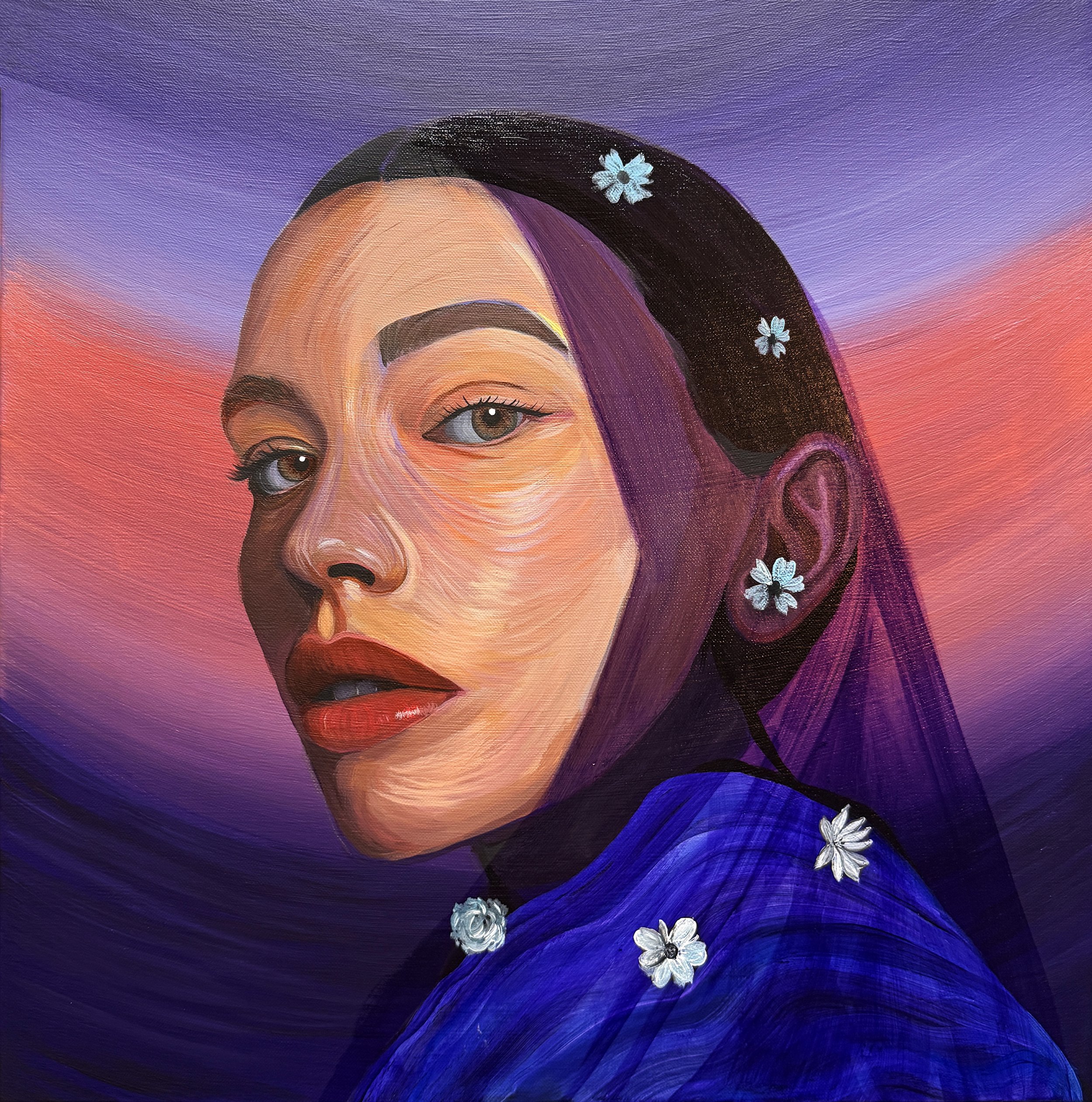
That freedom remains one of the defining qualities of her work. Rather than following established formulas, each painting evolves organically, beginning with instinct before gradually finding balance through refinement. The result is a practice that feels deeply personal while remaining universally accessible. Although portraiture sits at the center of her work, Shay Mess insists that her paintings are about far more than likeness.
"The face is simply a structure through which something more subtle appears," Mess says.
Her subjects become vessels for emotion rather than documentation. A gaze, a slight gesture, or the tension within a pose often communicates more than any realistic rendering could. It is in these quiet expressions that her paintings find their greatest strength, allowing viewers to project their own memories, emotions, and experiences onto the canvas. Color plays an equally important role in that emotional dialogue.
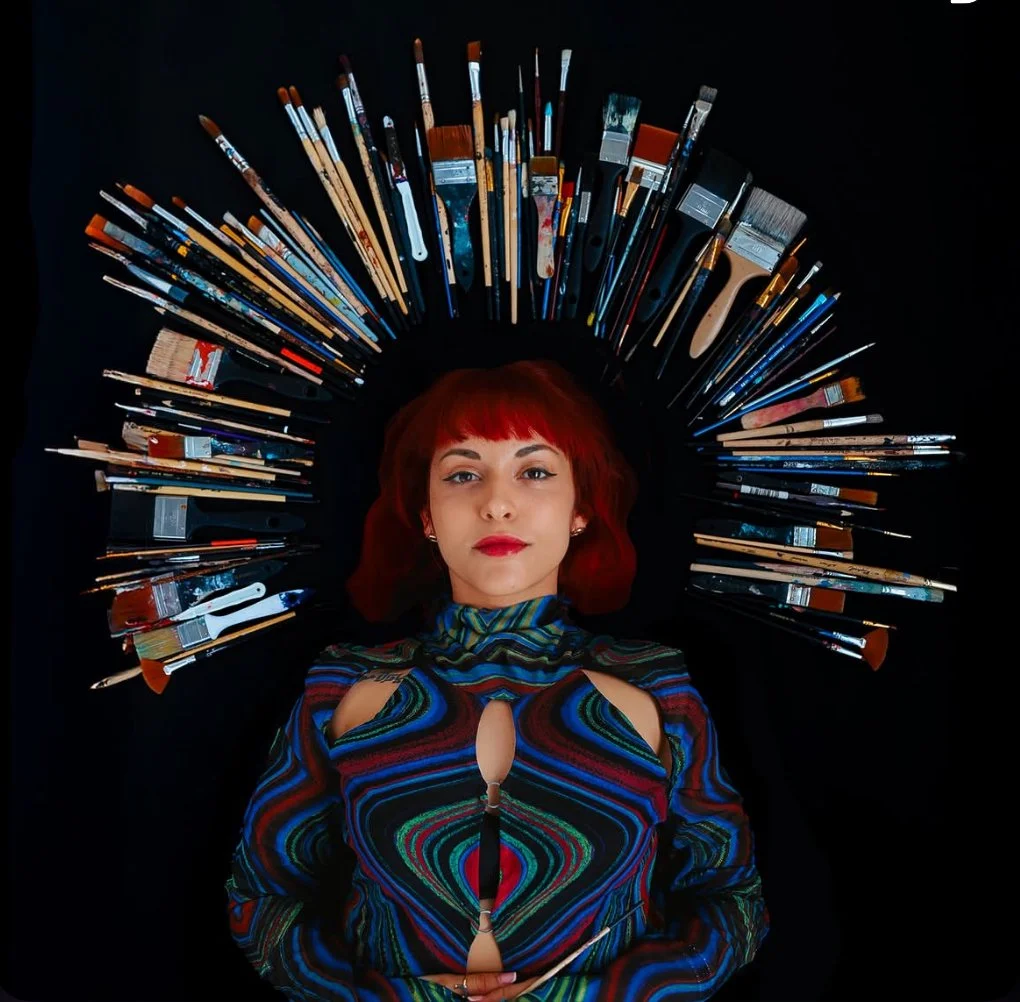
Rather than treating color as decoration, Mess approaches it as its own language—one capable of carrying rhythm, atmosphere, and psychological depth. Vibrant palettes emerge naturally from each subject's emotional presence, creating a delicate balance between softness and intensity. Every hue feels intentional, yet instinctive, amplifying the emotional weight of each composition without overwhelming it.
Her paintings often exist in a compelling space between realism and abstraction. Anatomy provides an anchor, but once that foundation exists, expression takes over. Distorted forms, layered textures, symbolic imagery, and bold chromatic choices allow the emotional truth of the subject to surface.
"If everything is too realistic," Mess reflects, "the emotion can feel contained. If everything is too abstract, the human connection can disappear."
That balance has become one of the defining signatures of her visual language. Her acclaimed series Soul Distorsion explores this philosophy even further. For Mess, distortion is not about deformity but revelation.
"It is the moment where the invisible becomes visible."
Grief, transformation, longing, contradiction, and healing all become visible through subtle shifts in form. Rather than presenting identity as fixed, her paintings acknowledge the fragmented, evolving nature of being human.
Another recurring thread throughout her practice is femininity. Yet Mess rejects conventional portrayals of women as passive muses.Instead, the women inhabiting her canvases embody complexity. They are tender and powerful, vulnerable yet unwavering. Their presence suggests intuition, resilience, mystery, and quiet authority. Through these figures, femininity becomes not an aesthetic but an emotional force.
Living in France has naturally shaped her artistic sensibility. Paris offers constant dialogue with centuries of painting, architecture, fashion, and visual culture. Yet her artistic identity stretches beyond Europe. Drawing equally from her Moroccan heritage, travel, and deeply personal experiences, Mess creates paintings that exist between cultures while remaining grounded in universal human emotion.
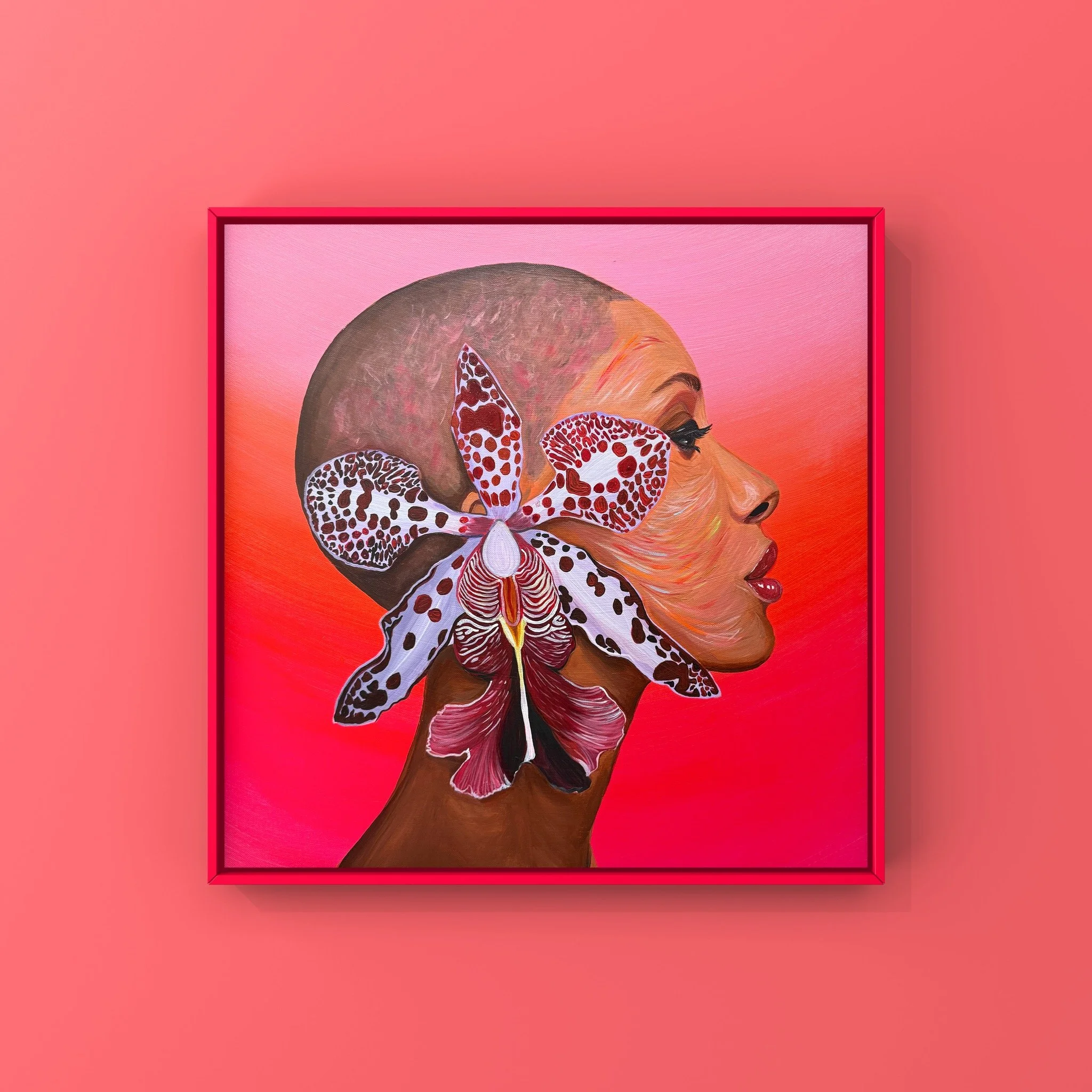
That universality has allowed her work to resonate well beyond France. Early exhibitions in Paris soon expanded internationally, with audiences in London and New York responding to the emotional immediacy of her paintings.
While growing recognition has brought confidence, it has also reinforced the importance of protecting the intimate space where her work begins.
"I try not to let visibility lead the painting," she says. "My strongest works usually come when I return to the original reason I paint: to express something honest, human, and transformative."
Today, her practice continues to evolve. Rather than focusing solely on portraiture, Mess is expanding into fuller compositions that incorporate symbolic elements such as flowers, hands, birds, and animals. These additions are never decorative; instead, they extend the emotional presence of each figure while opening new possibilities for storytelling. Even as the compositions become increasingly layered, she remains committed to preserving the direct emotional connection between painting and viewer.
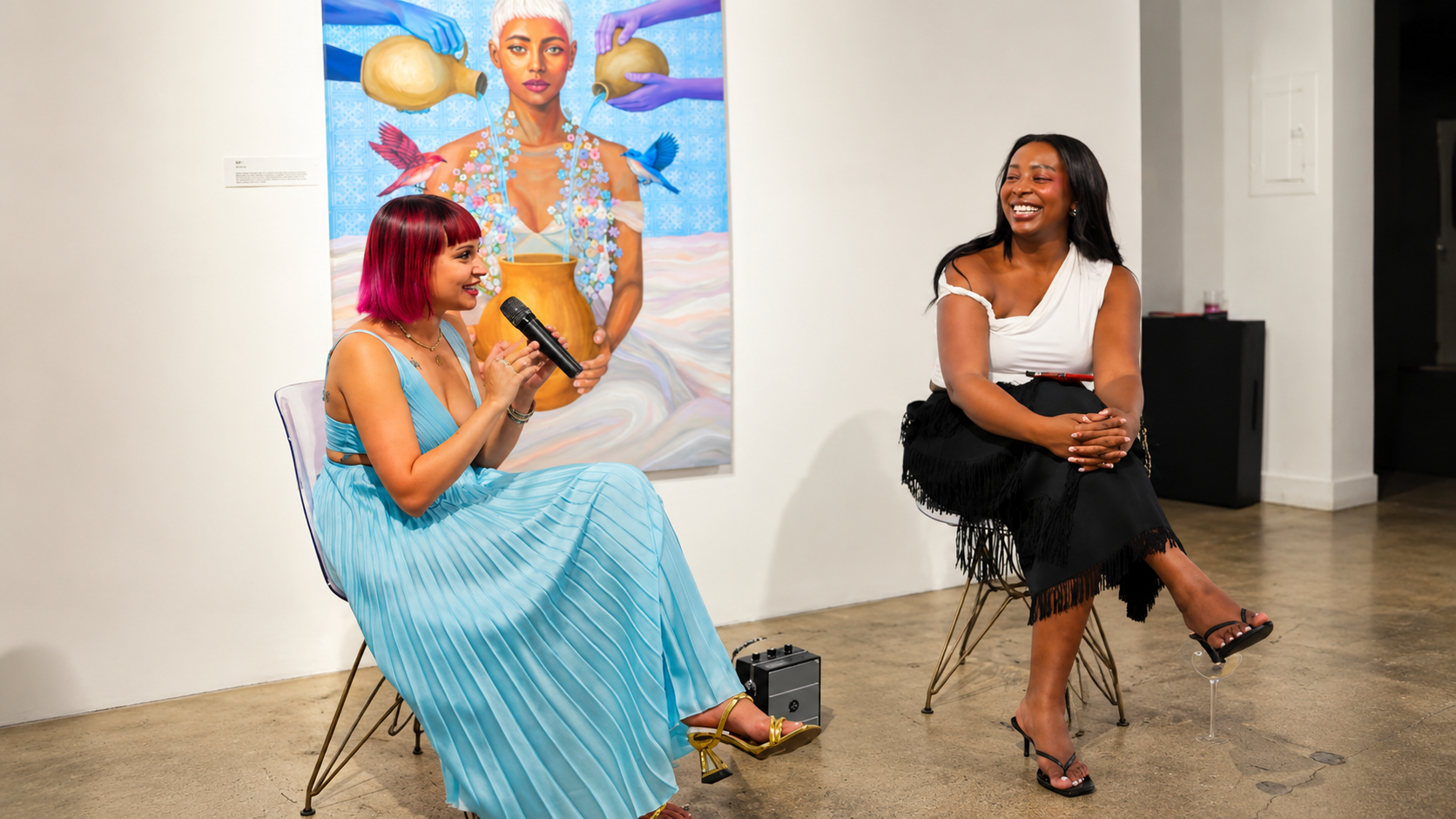
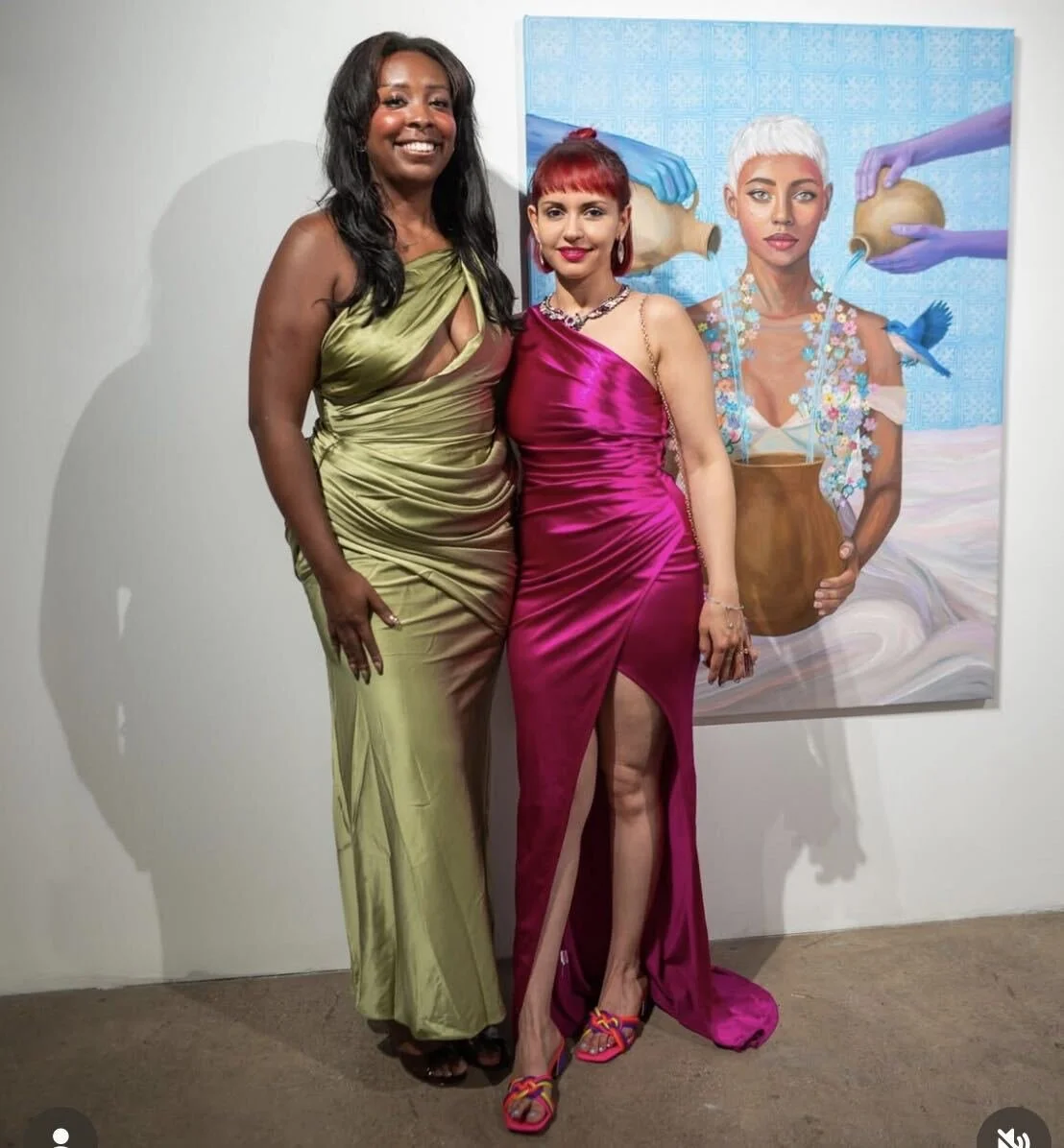
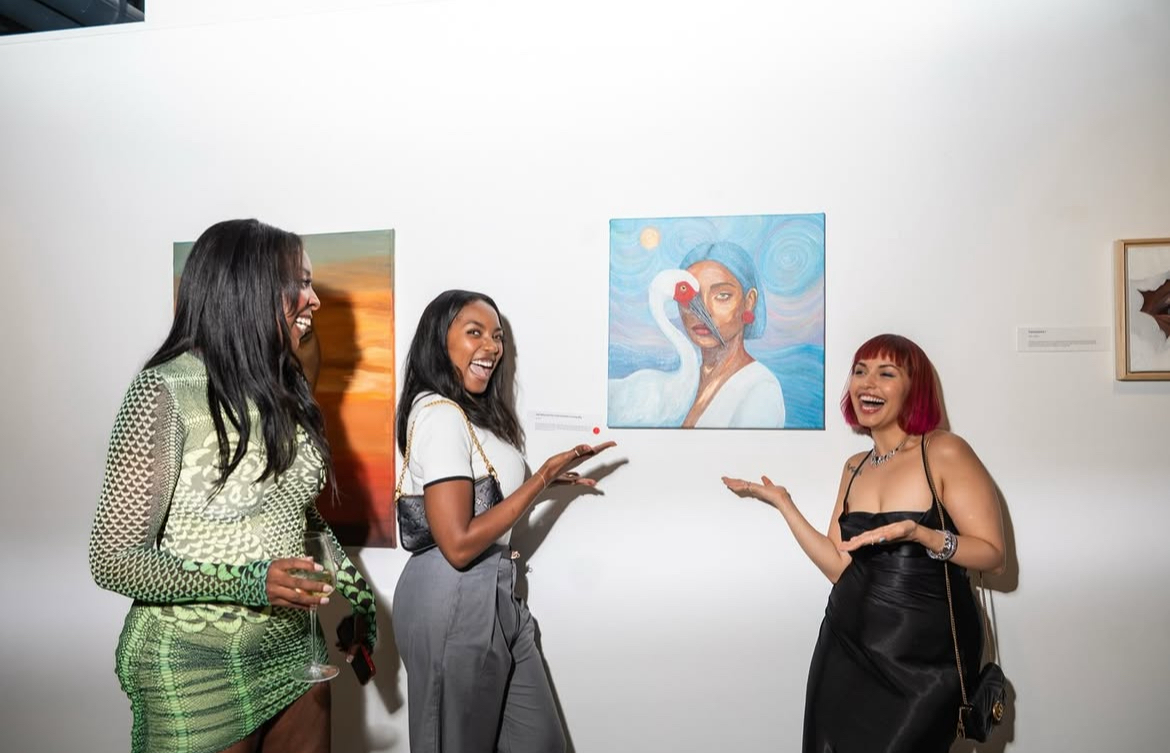
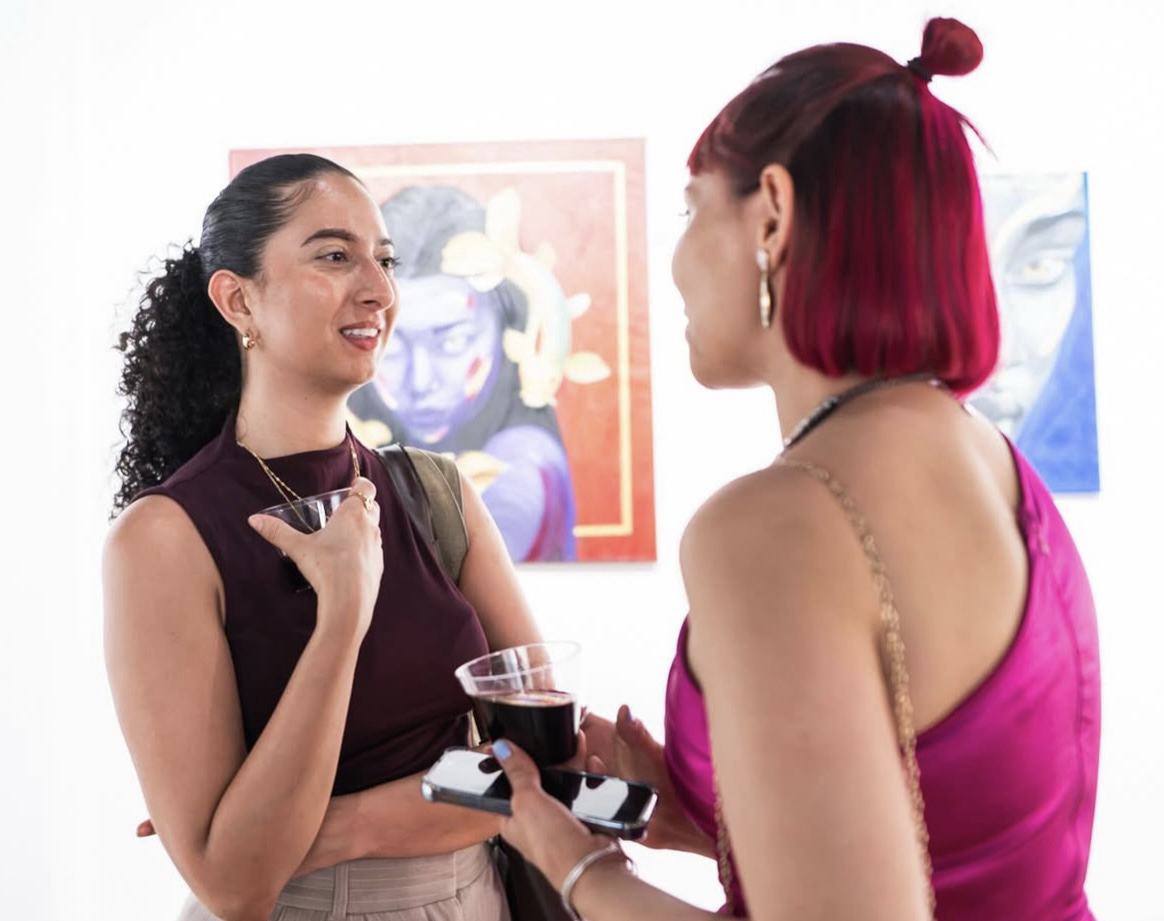
That evolution reaches perhaps its most personal expression in her upcoming solo exhibition, Echoes of Light, opening in New York. Hosted at Design Gallery in Brooklyn. Curated by art dealer, advisor, and Columbia University doctoral scholar Adrielle Nicole Turner, professionally known as Adrielle or Adrielle le Belle, the exhibition offered far more than a traditional gallery presentation. The evening unfolded as an intimate private dinner salon paired with a showcase of Mess's signature large-scale, richly saturated figurative paintings, works that radiated both emotional depth and technical precision.
What lingered long after guests left was not only the strength of the artwork, but the atmosphere itself. There was a genuine sense of community, generosity, and love that filled the room, creating a space where artists, collectors, curators, and supporters came together to celebrate creativity and connection. The exhibition became a symbol to the power of art bringing people together, and the response from collectors reflected that impact, with multiple paintings finding new homes throughout the evening.
For Mess, Echoes of Light was more than a successful exhibition, it was the realization of a deeply personal vision. Through art, memory, and shared human experience, the evening became a celebration of healing, excellence, and the enduring light we leave in one another.
Created in memory of her late sister, Ikram, the exhibition serves as both tribute and meditation. Inspired by her sister's love of sunsets, mountains, oceans, nature, and life itself, the series explores themes of love, care, resilience, healing, and remembrance.
Following this profound personal loss, Mess spent several months living at a Shaolin temple in China, reconnecting with discipline, silence, nature, and inner balance. Those experiences now inform the emotional spirit of the exhibition, transforming grief into a language of hope.
Rather than dwelling solely on loss, Echoes of Light becomes an invitation to recognize the quiet ways love continues to move through us, especially in acts of care, tenderness, memory, and human connection.When asked what she hopes viewers carry with them after experiencing her work, her answer is beautifully simple.
"I hope they feel seen."
Not because the paintings depict them directly, but because they awaken something already present within them. A memory. A feeling. A quiet recognition that beauty and pain often coexist—and that transformation is always possible.
For emerging artists, her advice reflects the same philosophy that has guided her own career. Protect your authenticity. Work consistently. Develop discipline. Apply for opportunities before you feel ready. Speak confidently about your practice. Most importantly, never lose sight of the intimate reason you began creating in the first place.
In a world that often celebrates noise, Shay Mess reminds us of the enduring power of stillness. Her paintings ask us to slow down, to look closer, and to discover that within every face lies something far greater than appearance alone—a reflection of our shared humanity.